Best NAS for Home Backup: UGREEN DH2300 Leads

A ranked shortlist of six picks for home backup, from a one-bay Buffalo starter to a Synology DS225+ with 282 MB/s claimed transfer speed.

By Connor SmallUpdated 15 min read
On this page
- Best NAS for home backup at a glance
- How I cut a shortlist of dozens down to six
- One bay or two: what actually decides it?
- 1. UGREEN NAS DH2300 — Best overall
- 2. BUFFALO LinkStation 210 — Best for beginners
- 3. Synology DS225+ — Best for heavy use
- 4. UGREEN NAS DXP2800 — Best premium
- 5. Synology DS124 — Best compact
- 6. APC UPS 600VA/330W BE600M1 — Best budget pick
- The spec that misleads buyers most
- Do you need a UPS with your NAS?
- What the listings do not tell you about drives
- The verdict
- FAQ
The best NAS for home backup is the UGREEN NAS DH2300, a 2-bay enclosure with 4GB of RAM on board and a 1GbE port, priced in the middle of this set and clearly aimed at first-time owners. If you want a drive already inside the box, the Buffalo LinkStation 210 arrives with 2TB fitted and a 1-bay chassis for a simpler start. The rest of this shortlist covers heavier use, tight shelves, and the wall socket behind them.
Best NAS for home backup at a glance
| Pick | Bays | Key spec | Price |
|---|---|---|---|
Best overall UGREEN NAS DH2300 |
2-Bay | 4GB RAM, 1GbE, up to 64TB claim | Check Price |
Best for beginners BUFFALO LinkStation 210 |
1-Bay | 2TB drive included | Check Price |
Best for heavy use Synology DS225+ |
2-Bay | 282 MB/s transfer claim, 3-year warranty | Check Price |
Best premium UGREEN NAS DXP2800 |
2-Bay | Intel N100, 8GB DDR5, 2.5GbE claim | Check Price |
Best compact Synology DS124 |
1-Bay | 2.75 lb, 8.82 x 2.8 x 6.54 in | Check Price |
Best budget pick APC BE600M1 UPS |
UPS | 600VA / 330W, 23 min at 100W claim | Check Price |




How I cut a shortlist of dozens down to six
Home backup is a narrow job. The device has to run all day, hold family photos and laptop images, and survive one drive dying without losing the lot. That framing did most of the cutting for me.
I started with the criteria in this order, and gave them roughly this weight:
- Redundancy, worth about a third of the score. Two bays for a mirror is the point of a NAS for backup. One-bay units still earn a place, but only when the price or footprint pays for the compromise.
- Warranty and ownership window, worth about a quarter. A backup box needs to still be running in year three. Two years is the floor, three is a real advantage.
- Network speed on the listing, worth roughly a fifth. Gigabit is the baseline. 2.5GbE on a listing matters only if your router matches.
- RAM and CPU claims, worth about a fifth, and only when the listing is specific. "High-performance processor" is not a specification, so it does not score.
That list eliminated bare enclosures with no published warranty, single-bay units at premium prices, and anything whose page would not name a network port. Six survived: four proper NAS units, one Synology 1-bay for the shelf case, and one UPS because a NAS without one is a partial answer.
Two things I deliberately did not weigh: cloud app names, and marketing labels like "AI-powered". Both change on a software update.
One bay or two: what actually decides it?
The obvious specification to compare is total capacity. That is the wrong lens for a backup box. What decides it is whether a single drive failure loses your data or not.
A one-bay NAS is a copy, not a backup, until you pair it with a second location. A two-bay NAS in RAID 1 gives you a live mirror inside the same box, which covers the most common failure by far: one disk quietly dying. That is why four of the five NAS picks here are 2-bay units, and why the two 1-bay units are placed carefully.
- If your photos, tax records and laptop images matter, buy a 2-bay unit and mirror them.
- If you are learning what a NAS even is, a 1-bay unit is a fair starter, and the Buffalo ships with the drive already fitted so nothing else needs buying.
- If footprint on a shelf is the constraint, the Synology DS124 at 2.8 in wide is the shape you want, and you accept the trade.
1. UGREEN NAS DH2300 — Best overall
A 2-bay enclosure with 4GB of RAM and a stated 64TB ceiling, aimed squarely at a first-time buyer who wants mirroring without a manual.
Best for: a first-time buyer who wants two-drive redundancy without a steep learning curve Skip it if: you plan to transcode 4K video or run a dozen apps
The DH2300 wins the top slot on a simple argument: it is the cheapest 2-bay NAS in this shortlist while still publishing the specs a home backup buyer actually needs. Two drive bays for a mirror. 4GB of RAM stated on the listing. A 1GbE network port, which matches almost every consumer router in service. A 2-year manufacturer warranty. Weight is 4.41 lb and the footprint is 8.39 x 5.94 x 3.86 in, so it sits happily on a shelf next to the router.
UGREEN says the enclosure supports up to 64TB across the two bays and that the software uses AI to tag faces and objects in photos. Both are the manufacturer's claims. What is not a claim is the price position: the DH2300 is the second-cheapest device in this set, and the cheapest true 2-bay unit. Against the DS225+ it gives up the Intel transcoding chip and a year of warranty. Against the DXP2800 it gives up 2.5GbE, DDR5 memory, and dual M.2 slots. For a household running overnight backups, neither loss shows.
Pros:
- 2-bay chassis at a mid-tier price
- 4GB RAM stated on the listing
- 2-year manufacturer warranty
- Compact 8.39 x 5.94 x 3.86 in footprint
- Gigabit port matches most home routers
Cons:
- 1GbE ceiling, no 2.5GbE headroom
- No published CPU model on the listing
- Sold diskless, drives cost extra
2. BUFFALO LinkStation 210 — Best for beginners
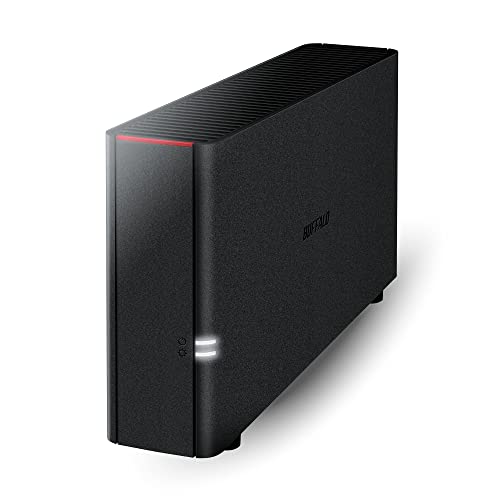
A 1-bay NAS that ships with a 2TB drive already fitted, so setup is plug, sign in and start copying.
Best for: someone who wants a drive already inside the box and a working setup in an hour Skip it if: you want redundancy across two disks from day one
The LinkStation 210 solves the biggest reason first-time NAS buyers give up: choosing a drive. It arrives at 2TB, 1-bay, weighing 2.43 lb, with a 2-year warranty and a US support line Buffalo says answers around the clock. There is nothing to research on the storage side before it works.
The catch is inherent to a 1-bay unit. If that single drive fails, the local copy goes with it. Buffalo's listing says the software includes NAS Navigator and PC backup tools, and calls it a subscription-free personal cloud. Both fair descriptions of what a NAS does. Against the DS124, the Buffalo's advantage is that the drive is already in the box; against the DH2300, it gives up the mirror. Treat this one as an easy first step, and set a calendar reminder to add a cloud backup or a second location. Of the six picks, the LinkStation is the second-cheapest in the set.
Pros:
- 2TB drive included, no drive shopping
- 2-year warranty
- Light at 2.43 lb
- 24/7 US support claim on the listing
Cons:
- Single bay, no mirror inside the box
- Fixed 2TB ceiling on this configuration
- Oldest release date in the NAS group
3. Synology DS225+ — Best for heavy use
A 2-bay Synology with an Intel CPU for hardware transcoding, a 3-year warranty, and a listing that claims 282 MB/s transfer.

Best for: a household that streams 4K, runs cameras, and wants a long warranty Skip it if: you only need overnight backups of two laptops
The DS225+ is the pick when the NAS has more than one job to do. Synology says the Intel CPU handles hardware transcoding, which is the thing that turns a NAS into a personal streaming box for 4K files. The listing quotes a transfer speed of 282 MB/s and support for up to 30 IP cameras with AI detection. Both are manufacturer claims, and both are the kind of headroom a plain backup box does not need.
Where the DS225+ genuinely stands apart in this set is warranty: 3 years, against 2 years everywhere else. That single figure is a strong argument for a device you plan to leave running for half a decade. Weight is 2.87 lb and the chassis is 6.5 x 9.14 x 4.25 in, close to the DXP2800 but a touch narrower. It is the second-most expensive pick here, and the price gap over the DH2300 buys you the Intel chip, the extra year of coverage, and Synology's software ecosystem rather than more storage.
Pros:
- 3-year warranty, longest in the set
- Intel CPU for hardware transcoding claim
- 282 MB/s transfer claim on the listing
- 2-bay design supports RAID 1
- Camera support up to 30 devices claimed
Cons:
- Priced near the top of this shortlist
- Diskless, so factor drive cost separately
- 2-bay ceiling limits future expansion
4. UGREEN NAS DXP2800 — Best premium
A 2-bay enclosure with a stated Intel N100 CPU, 8GB DDR5 RAM, 2.5GbE networking, and dual M.2 slots.

Best for: a remote worker or creator with large project files and a fast home network Skip it if: your router still tops out at gigabit and you have no plans to upgrade
The DXP2800 is the most expensive pick in this set, and the specification sheet is where the money goes. UGREEN names the CPU (Intel N100 quad-core), the RAM type (8GB DDR5), the network port (2.5GbE), and mentions dual M.2 NVMe slots for SSD caching or SSD-only storage. It also cites a headline capacity of up to 80TB across the two HDD bays and the two M.2 slots. Every one of those is a UGREEN claim; each is at least specific enough to check against your own network.
Weight is 5.69 lb, the heaviest NAS in the shortlist, and the footprint is 6.97 x 9.33 x 4.29 in. This is a device for someone whose bottleneck is genuinely the network. If your router and switch stop at 1 gigabit, most of what you pay for here goes unused, and the DH2300 does the same backup job for less. Against the Synology DS225+ the trade is different: you gain the faster port and DDR5, you lose the extra year of warranty and Synology's software depth.
Pros:
- Intel N100 CPU named on the listing
- 8GB DDR5 RAM stated
- 2.5GbE port claim
- Dual M.2 NVMe slots for SSDs
- Up to 80TB combined capacity claim
Cons:
- Most expensive pick here
- Heaviest NAS in the set at 5.69 lb
- 2-year warranty, shorter than the DS225+
- 2.5GbE only useful with matching network gear
5. Synology DS124 — Best compact
A 1-bay Synology in a tall, narrow chassis, 2.8 in wide, aimed at a single shelf slot.

Best for: a single-user setup on a shelf where footprint matters more than raw capacity Skip it if: you want RAID mirroring in the same box
The DS124 is the shape argument. At 8.82 x 2.8 x 6.54 in and 2.75 lb, it is the narrowest NAS on the shortlist, and it slots into gaps that a 2-bay chassis cannot. Synology's listing describes it as a personal backup and file hub, with phone and computer backup, camera support, and a 2-year warranty. It is priced in the middle of the set, above the Buffalo, below the DH2300.
The straight comparison here is against the LinkStation 210. The Synology loses on convenience because it ships diskless, and wins on software depth: Synology's ecosystem is one of the reasons people buy the brand. Against every 2-bay unit in this set, the DS124 makes the same trade a 1-bay always makes. You lose the in-box mirror. Pair it with an off-site copy and it is a fine backup target for one person; leave it as your only copy and it is a single point of failure.
Pros:
- Narrow 2.8 in chassis fits tight shelves
- Light at 2.75 lb
- 2-year warranty
- Synology software ecosystem
Cons:
- Sold diskless, drive not included
- 1-bay means no in-box redundancy
- Priced above the 2TB-included Buffalo
6. APC UPS 600VA/330W BE600M1 — Best budget pick
A small battery backup for the wall socket behind the NAS, so a power cut ends in a clean shutdown rather than a corrupt volume.

Best for: protecting whichever NAS you buy from an ugly power cut Skip it if: you already have a whole-home battery backup
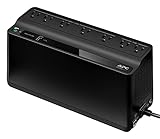
This is the odd one on the shortlist, and it earns the slot on purpose. A NAS pulled off power mid-write can corrupt a RAID volume in a way that no included software fixes. A basic UPS solves that failure mode. The APC BE600M1 is rated at 600VA / 330W, with seven outlets total (five on battery and surge, two surge only), a built-in 1.5A USB port, and APC's listing quotes 23 minutes of runtime at a 100W load. A home NAS with two drives idles well below that.
It is the cheapest pick in this shortlist and it carries the longest warranty listed: 3 years, repair or replace. Weight is 7.5 lb, most of which is the sealed battery, and APC says the battery is user-replaceable when it ages out. The trade is that it does not, by itself, back up anything: it buys the NAS enough time to see the outage and shut down cleanly. Pair it with any pick on this list and the combination is better than any pick alone.
Pros:
- Cheapest pick in the shortlist
- 3-year warranty
- 23-minute runtime claim at 100W
- Seven outlets, five with battery
- User-replaceable battery, per the listing
Cons:
- Not storage, does not back up files itself
- Only one seller lists it, per the input
- 330W ceiling limits how many devices it covers
The spec that misleads buyers most
Most guides to picking the best NAS for home backup compare total capacity first. Terabytes are easy to line up in a table. They are not what actually decides the buy.
The specification that matters is RAM, and the reason is boring: a NAS with too little memory chokes on the very thing you bought it for, which is a background sync of a phone camera roll while a laptop image is running. The DH2300 lists 4GB, the DXP2800 lists 8GB DDR5, and the Buffalo does not name a figure at all. That order tracks the price order, which tells you the market has already priced this in.
Two habits will keep you out of trouble:
- Read the RAM figure before the capacity figure. A 20TB unit with 1GB of RAM is a slow 20TB unit.
- Match the network port to your router. 2.5GbE on the NAS costs nothing extra if your router is 2.5GbE. If it is not, you pay for headroom you cannot use.
Capacity still matters. It matters less than the two lines above it.
Do you need a UPS with your NAS?
Short answer: yes, if the data on it matters. Longer answer follows.
A NAS in RAID 1 is protected against one drive failing. It is not protected against the power going out during a write, which can leave the array in an inconsistent state. A small UPS costs less than a single hard drive and it changes the failure mode from "corrupt volume, restore from backup" to "clean shutdown, boot back up." That is why the APC BE600M1 is on the list even though it stores nothing.
Three signs you want one:
- Your neighbourhood loses power more than twice a year.
- You run the NAS in the same room as a laser printer, a kettle, or anything else that trips a breaker.
- Your ISP router is on the same circuit and you want the backup job to keep running for a few minutes when the lights go out.
None of those apply? A surge protector alone is a fair compromise. A NAS with important data on it and no line-level protection is the pairing to avoid.
What the listings do not tell you about drives
Every diskless NAS in this set is sold as an enclosure, and the manufacturer's listing tops out at a headline capacity that assumes you fit the largest drives on the market. That is the ceiling, not what arrives at your door.
Things worth knowing before you order:
- NAS-rated drives are a separate purchase. They are firmware-tuned for 24/7 operation. Desktop drives work, but they wear differently.
- RAID 1 halves your usable capacity. Two 8TB drives in a mirror give you 8TB of files, not 16TB. That is the point of the mirror.
- The listing's maximum capacity is a claim, not a promise. If the drives at that size do not exist yet, or cost more than the NAS itself, the ceiling is theoretical.
- Warranty on the enclosure does not cover the drives. Drive warranties come from the drive maker, separately, and often for a different length.
The Buffalo LinkStation 210 sidesteps most of this by shipping with 2TB fitted, which is why it earns the beginner slot. Every other NAS here needs the drive line item added to the cart.
The verdict
For most households looking for the best NAS for home backup, the UGREEN NAS DH2300 is the right default. It is a 2-bay unit at a mid-tier price, with 4GB of RAM, a gigabit port, and a 2-year warranty, and it is the cheapest true 2-bay NAS on this shortlist. That combination is hard to beat when the job is nightly backups of a couple of laptops and a phone camera roll.
Two conditions flip the choice. If you also want to stream 4K movies from the box, run several IP cameras, or you want three years of warranty rather than two, the Synology DS225+ is the pick. Synology says it hits 282 MB/s and handles hardware transcoding on the Intel CPU, and the third year of coverage is genuine peace of mind for a device that runs continuously. If your home network is already at 2.5GbE and you move very large project files, the UGREEN DXP2800 is worth the step up for the N100 CPU, 8GB of DDR5 and the dual M.2 slots.
Whichever you buy, add the APC BE600M1 behind it. A clean shutdown during an outage is worth more than any specification on the enclosure.
FAQ
Is a NAS worth it for home backup versus a cloud subscription?
Is a NAS worth it depends on how long you plan to keep the files. A NAS is a one-time purchase plus the drives. Cloud storage is a monthly fee that never ends. Over three to five years, a 2-bay NAS with mirrored drives costs less than most family cloud plans, and the data lives in your house rather than someone else's data centre.
What is the best NAS for home backup on a tight budget?
The best NAS for home backup on a tight budget is the BUFFALO LinkStation 210, because it arrives with a 2TB drive already installed. There is no separate drive purchase and no configuration decision on day one. The trade is a single bay, so pair it with a cloud copy or a second location so that a single drive failure does not lose everything.
How does the UGREEN DH2300 compare to the Synology DS225+?
The UGREEN DH2300 compared to the Synology DS225+ is a cheaper 2-bay unit with 4GB of RAM and a 1GbE port, backed by a 2-year warranty. The DS225+ costs more, adds an Intel CPU for transcoding, claims 282 MB/s transfer speeds, and carries a 3-year warranty. Pick the DH2300 for plain backups; pick the DS225+ if you also want streaming and cameras.
Do I need two drive bays in a NAS for home backup?
You need two drive bays if you want redundancy inside the box. A 2-bay NAS in RAID 1 mirrors the same files across both drives, so a single drive failure does not lose your data. A 1-bay unit is a copy, not a backup, unless you pair it with a second location. Four of the five NAS picks here are 2-bay for that reason.
Should I add a UPS to my NAS setup?
Should I add a UPS to my NAS setup is a yes for most homes. A power cut mid-write can corrupt a RAID volume, which no software feature on the NAS itself fully prevents. The APC BE600M1 is rated at 600VA and 330W, and APC quotes 23 minutes at a 100W load. That is more than enough time for a home NAS to shut down cleanly.
Start with the UGREEN NAS DH2300 and a pair of NAS-rated drives, add the APC BE600M1 behind it, and you have covered the two failure modes that ruin most home backup setups: a single dying drive, and a mid-write power cut. Neither is exotic. Both happen to people who thought they were safe because they had "a backup". The point of a proper home NAS is that it turns a single copy into a mirrored copy on hardware built to run continuously, and the point of the UPS is that it lets the mirror finish the sentence. That is a durable setup, not an exciting one, and durability is the whole job.