Best Single Monitor Arm for Students Who Study Late

A dorm desk is smaller than the monitor sitting on it. The best single monitor arm for students clears the surface, holds a 34-inch screen, and installs without tools between classes.

By Connor SmallUpdated 15 min read
On this page
- Best single monitor arm for students at a glance
- How I narrowed the field to six arms
- What actually decides a student monitor arm
- 1. ErGear Single Monitor Arm — Best overall
- 2. Suptek Single Monitor Arm — Best budget pick
- 3. VIVO STAND-V001 — Most versatile
- 4. WALI GSMP001N — Best warranty
- 5. Acer AMS001 — Best upgrade
- 6. HUANUO FlowLift Single Monitor Mount — Best premium
- Will it fit a dorm or rental desk?
- How much screen can a student arm really hold?
- What the listings do not tell you about install
- The verdict
- FAQ
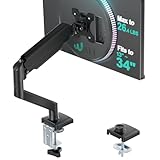
The best single monitor arm for students is the ErGear EGDMA69B, a tool-free clamp arm that fits 13-to-34-inch screens up to 19.8 lb, weighs 4.43 lb itself, and carries a 2-year warranty. If your budget is tighter than your dorm desk, the Suptek MD8B-1 covers 17-to-35-inch screens up to 24.25 lb for the lowest price position in this set. Every arm here is a single-screen mount with VESA 75x75 or 100x100 support, so the fit question is the desk, not the monitor.
Best single monitor arm for students at a glance
| Pick | Screen range | Load capacity | Warranty | Price |
|---|---|---|---|---|
Best overall ErGear EGDMA69B |
13"-34" | 19.8 lb | 2-year | Check Price |
Best budget pick Suptek MD8B-1 |
17"-35" | 24.25 lb (claim) | 1 year | Check Price |
Most versatile VIVO STAND-V001 |
13"-38" (32" regular) | 22 lb | 3-year | Check Price |
Best warranty WALI GSMP001N |
13"-34" | 26.4 lb | 10-year | Check Price |
Best upgrade Acer AMS001 |
17"-34" | 19.8 lb | 1-year | Check Price |
Best premium HUANUO HNSS6 |
13"-32" | 19.8 lb | Not listed | Check Price |




How I narrowed the field to six arms
The Amazon search for the best single monitor arm for students returned more than 40 listings. Amazon's algorithm ignores the "students" qualifier and just returns single-screen arms, so the shortlisting had to add that back manually.
I cut three ways. First, disqualification: any arm that did not publish both a screen size range and a weight capacity was out, because a student cannot verify fit from a picture. Second, format: dual-screen arms, laptop trays, and stand-alone risers were dropped, because a single arm is a different purchase. Third, mounting: every survivor here supports both a C-clamp and, in most cases, a grommet base, so a dorm or rental desk with a lip or a cable hole still works.
What made it through:
- Six arms, all rated for a 34-inch or larger screen except the HUANUO HNSS6, which tops out at 32 in.
- Every pick carries VESA 75x75 and 100x100 support, so any standard student monitor bolts on.
- Load ratings run from 19.8 lb (three of six) up to 26.4 lb on the WALI.
- Published warranties span 1 year to 10 years, with one arm not listing a warranty at all.
- Two arms sit in the entry price band, two mid, two premium.
That last split is what the picks below map onto: a first-year budget, a "keep it forever" pick, and an upgrade tier for heavier panels.
What actually decides a student monitor arm
Most guides compare load capacity. That is not what decides it for a student. The deciding specification is desk clamp range, because a dorm desk is almost never a standard 1-inch particleboard slab.
Here is the trick with student housing. Dorm desks come in three shapes: thin laminate over MDF, thicker solid wood in older buildings, and metal-framed modular desks with a rolled front edge the clamp cannot grip. A published clamp range like the Acer's 0.59-to-3.15-inch window tells you at a glance whether the arm fits. VIVO publishes a 3.25-inch maximum. ErGear and Suptek publish a tool-free clamp but do not list a thickness range on the listing itself, so you are trusting a photo.
The second decider is grommet backup. Four of the six picks include a grommet base. If your desk has a cable hole and no clean clamping edge, that is the only mount that works. A student who moves every August wants both.
The third decider is arm reach, not just height. The ErGear publishes 18.1 in of extension. Suptek publishes 21.65 in. That is the difference between the monitor sitting over the middle of your desk versus pushed to the back wall over a printer.
1. ErGear Single Monitor Arm — Best overall
The ErGear EGDMA69B is the pick because it clears a dorm desk of clutter without the tool-free-mount tax the premium arms charge.
Best for: a dorm desk where the monitor and the textbooks fight for the same square foot. Skip it if: your screen is larger than 34 inches.
The ErGear is the second-cheapest of the six and one of only three that ship with a stated 2-year warranty. It handles 13-to-34-inch screens up to 19.8 lb, which covers every mainstream student monitor from a 24-inch 1080p panel to a 34-inch curved ultrawide within spec. ErGear says the upgraded VESA plate is tool-free, which cuts setup time when you are unpacking in a shared room and cannot leave hardware on the hallway floor. The arm itself weighs 4.43 lb and boxes down to 17.5 x 18.1 x 3.94 in, so it fits in a car trunk on move-in day. What differentiates it inside this set is the balance: cheaper than the mid-band picks, warrantied where the HUANUO is not, lighter than the Acer, and rated for a wider screen than the HUANUO. The trade-off is arm reach. The ErGear extends 18 in, which is shorter than the Suptek's claimed 21.65 in, so a very deep desk will pull the screen closer than a taller student might want.
Pros:
- 2-year warranty on an entry-band arm
- Tool-free VESA plate claim
- 19.8 lb capacity covers most student monitors
- 4.43 lb arm weight, easy to move dorms
- Fits screens up to 34 in
Cons:
- Reach is shorter than the Suptek
- Clamp thickness range not published
- Only two sellers list it
2. Suptek Single Monitor Arm — Best budget pick
The Suptek MD8B-1 is the cheapest of the six and still publishes the longest reach in the set.

Best for: a first-year setup on a tight book-and-supplies budget. Skip it if: you want more than a one-year warranty.
Suptek covers 17-to-35-inch screens, which is the widest top end in this roundup, and the listing claims a 24.25 lb capacity. Suptek says the gas spring supports flat and curved monitors, and that the maximum height adjustment reaches 18.7 in with 21.65 in of extension. In practice for a student, that reach matters if your desk is pushed against a wall and you need to pull the screen forward to read at night. The listing dimensions come in at 19.5 x 21.7 x 2 in, so the arm is long and flat in the box. The trade-off against the ErGear is the warranty: Suptek publishes a 1-year term where ErGear publishes 2, and only one seller lists the Suptek. That reads as thinner support if a gas spring fails a year in, and gas springs are the part most likely to lose tension over years of study sessions. If price is the pinch point and you can accept the shorter warranty, this is the arm.
Pros:
- Cheapest of the six
- 21.65 in reach claim, longest in the set
- 17-to-35-inch screen range
- Tool-free clamp
- Metal cover, per the listing
Cons:
- Only 1-year warranty
- Single seller listed
- No published weight for the arm itself
3. VIVO STAND-V001 — Most versatile
The VIVO is the arm to pick when you do not yet know what desk you will be using next semester.

Best for: a rental desk where the clamp edge and the grommet hole are both options. Skip it if: you plan to mount a curved ultrawide past 34 inches.
VIVO fits 13-to-38-inch ultrawide screens (32-inch regular) up to 22 lb, and the clamp secures to desks up to 3.25 in thick. That is the thickest published clamp range in the set, which matters in older dorm buildings where the desks are heavier stock. VIVO says the arm offers 90 degrees of tilt each way, 360-degree swivel, and 16 in of height along the centre pole. Both a C-clamp and a grommet mount are included, so a student who transfers, sublets, or moves off-campus in year two does not need to buy a second arm. The 3-year warranty is the second-longest here, behind only the WALI. The trade-off is that the height range along the pole is 16 in versus the ErGear's 17.5 in, and the listing dimensions are compact at 5.91 x 16.5 x 4.33 in, which reads as a shorter pole for taller students who want the monitor well above the desk.
Pros:
- 3-year warranty
- Both C-clamp and grommet included
- 3.25 in clamp thickness, widest in set
- 22 lb capacity
- Well-established model number
Cons:
- 16 in height range on the pole
- 32-inch regular-screen ceiling
- Center pole design uses more depth
4. WALI GSMP001N — Best warranty
The WALI publishes a 10-year warranty, which is longer than most students will spend in school.

Best for: a student who wants one arm to last from freshman year through grad school. Skip it if: you need a published weight and dimensions on the listing.
Nothing else in this set comes close on stated coverage. WALI publishes 10 years; the next-longest is VIVO at 3. The arm is rated for 13-to-34-inch screens up to 26.4 lb, which is the highest load rating of the six, and the listing shows a 2024 release. WALI says the arm extends 19.3 in and rises 17.3 in above the desk, and offers both C-clamp and grommet mounting for desks between 0.39 in and 2.76 in thick. That thickness window is the second-widest here, so a thin laminate desk still works. What sets the WALI apart inside this set is the intersection: the highest load capacity, the longest warranty, and a mid price position. The trade-off is that the listing does not publish an arm weight or full box dimensions, so you cannot check whether it fits in a shared closet before it arrives. For a student who wants the arm to outlast the laptop, that is a smaller cost than paying for a premium arm with no stated warranty.
Pros:
- 10-year warranty, longest in set
- 26.4 lb load, highest capacity here
- 19.3 in extension
- C-clamp and grommet included
- 0.39-to-2.76 in clamp thickness range
Cons:
- No published arm weight
- No listed box dimensions
- Higher price position than the ErGear
5. Acer AMS001 — Best upgrade
The Acer is the pick when the monitor cost more than the arm and you want the brand behind the arm to know it.

Best for: a design or CS student mounting a heavier IPS panel. Skip it if: your desk is thinner than 0.59 in or thicker than 3.15 in.
The Acer AMS001 sits in the premium band and fits 17-to-34-inch screens weighing 4.4 to 19.8 lb. The arm itself weighs 5.29 lb and measures 4.37 x 17.1 x 7.4 in. Acer says the pneumatic spring cores have passed 20,000 motion tests, which is a manufacturer bench claim, not a user report, and that the arm offers -60 to +90 degrees of tilt with 360-degree rotation. Both C-clamp and grommet mounting are supported, sized for desks 15 to 80 mm thick (0.59 to 3.15 in), which is the narrowest bottom edge in the set: a very thin desk laminate can slip through. What differentiates the Acer inside this set is the name on the box. A student buying an Acer monitor may want to keep the ecosystem tight, and the 5-minute one-piece install is faster than the multi-piece arms. The trade-off is a 1-year warranty at a premium price position, where the WALI offers 10 years for less.
Pros:
- Published clamp range 0.59-3.15 in
- 5.29 lb arm weight, published
- 20,000 motion-test claim
- Brand ecosystem with Acer monitors
- One-piece design, 5-minute install claim
Cons:
- 1-year warranty at a premium price
- Narrower minimum desk thickness
- Screen range starts at 17 in, not 13 in
6. HUANUO FlowLift Single Monitor Mount — Best premium
The HUANUO is the highest price position here for the tightest screen range, so buy it only if quiet, hold-anywhere positioning is what you value.

Best for: a quiet study setup where the arm has to hold position without drifting. Skip it if: you want a stated warranty on the listing.
The HUANUO HNSS6 fits 13-to-32-inch screens and 4.4 to 19.8 lb, with the same VESA 75x75 and 100x100 pattern support as the rest of the set. HUANUO says the arm is "80% sturdier than others" and remains stable at any angle without extra tightening. That "80% sturdier" is a manufacturer claim, not a measured comparison, so treat it as marketing. The listing dimensions are 4 x 16 x 12 in. Both a C-clamp and a grommet base are included, with a wood tabletop recommended. What differentiates the HUANUO inside this set is the promise of a hold-anywhere arm at a premium price position. The trade-off is real: this is the most expensive pick here, its 32-inch screen ceiling is the lowest of the six, and no warranty is listed on the input. A student paying the top price for the narrowest screen range and no published coverage is paying for a feel the listing cannot quantify.
Pros:
- One-piece design, 3-minute install claim
- Two mount options, C-clamp and grommet
- VESA 75x75 and 100x100 support
- Full-angle hold, per the manufacturer
Cons:
- Highest price position in the set
- No stated warranty on the listing
- 32-inch screen ceiling, lowest here
Will it fit a dorm or rental desk?
Fit is the question the product pages half-answer. Here is what to check before you order.
- Measure the desk edge thickness. Slide a ruler under the front lip and read the number. A dorm desk usually lands between 0.75 and 1.5 in, which every arm here covers. A thick oak library desk in an older building can push past 2 in, which rules the Acer's 3.15 in ceiling in but leaves the WALI (2.76 in) narrower.
- Check the front edge shape. A rolled steel front on some modular dorm desks refuses a clamp. That is when the grommet backup matters. Four of the six picks include one.
- Confirm there is 4 in of clearance behind the desk. The arm swings back before it swings forward. A desk pushed flush to the wall does not leave room for the arm's base assembly.
- Look for a cable route. ErGear, VIVO, WALI and Suptek all name integrated cable clips on the listing. That matters in a shared room where one messy cable run gets tangled fast.
- Weigh your monitor. The number is on a sticker on the back or in the manual. Match it to the load range on the listing before ordering.
If any of these fails, no arm on this list fixes it. The failure is the desk, not the mount.
How much screen can a student arm really hold?
Every arm on this list is rated for a 34-inch screen or larger, with one exception. The HUANUO tops out at 32 in. The Suptek claims 35 in as the ceiling, though student monitors that large are rare. So the screen size ceiling is not the limiting factor for a typical student setup with a 24-to-27-inch panel.
Weight is a different question. A 27-inch 1080p IPS panel usually weighs 8 to 12 lb without the stand, which every arm here covers with room to spare. A 34-inch curved ultrawide can push 15 to 18 lb, still inside the 19.8 lb ceiling on the ErGear, HUANUO and Acer. Only the WALI (26.4 lb) and Suptek (24.25 lb claim) leave meaningful headroom above that.
The reason headroom matters is the gas spring. Gas springs are calibrated to a range. Push a spring too close to its ceiling and it drifts under the weight of the monitor over months. Aim for a rated capacity at least 4 lb above the actual monitor weight, and the arm will hold its set position through a full semester of adjustments.
What the listings do not tell you about install
Product pages talk about "3-minute install" and "5-minute install". Those numbers assume everything is unboxed, the hex key is in hand, and the desk is clear. Real dorm installs run longer for reasons the listings skip.
- The base takes the desk clear. Every C-clamp needs a 2-to-3-inch strip of empty desk edge. On a shared dorm desk, that means moving the printer, the lamp, and the pile of textbooks first.
- The monitor VESA plate has to be off first. Many 24-to-27-inch monitors ship with a stand attached, and the stand comes off with four screws before the VESA plate is even visible.
- The cable slack matters. HDMI and power run through the arm channel, and short cables force a re-route. Have a 6 ft HDMI on hand before you start.
- One person, two hands, one monitor. A 27-inch screen is manageable solo; a 34-inch curved ultrawide is a two-person lift onto the VESA plate.
The upshot: budget 30 minutes for a first install, not the number on the box.
The verdict
For most students, the ErGear EGDMA69B is the right default. It fits 13-to-34-inch screens, holds up to 19.8 lb, ships tool-free, and carries a 2-year warranty at the second-lowest price position in this set. That combination beats every other arm here on cost-per-year of coverage inside a mainstream student screen range.
The recommendation flips in two clear cases. If the budget is the pinch point, the Suptek MD8B-1 is the cheapest arm on the list and publishes the longest reach at 21.65 in, though its warranty is only 1 year. If longevity is the priority and the arm has to survive four to six years of moves, the WALI GSMP001N publishes a 10-year warranty and the highest load rating in the set at 26.4 lb. The cutoff is time horizon: for a two-year purchase, ErGear wins on value; for a decade, WALI is the honest pick. The HUANUO and Acer are the premium picks and only justify the price if brand or hold-anywhere feel matters more than the specs on the page.
FAQ
Is a monitor arm worth it for a student?
Is a monitor arm worth it depends on how small the desk is. A dorm desk loses roughly a square foot of usable space to a monitor stand. An arm clears that surface for a keyboard, a notebook, and a coffee, and it lifts the screen to eye height, which reduces neck strain during long study sessions. For anyone at the desk more than three hours a day, the trade-off pays off inside a semester.
What VESA size do most student monitors use?
Most student monitors use VESA 75x75mm or 100x100mm, and every arm on this list supports both. Check the four threaded holes on the back of the monitor: measure between them horizontally and vertically in millimetres, and you have your pattern. Larger 34-inch curved panels sometimes use 100x100mm exclusively. If the holes are wider than 100mm, none of these single arms will fit.
ErGear or WALI: which is the better student pick?
ErGear or WALI comes down to how long you keep it. The ErGear is cheaper, lighter, and carries a 2-year warranty on a 19.8 lb, 34-inch capacity. The WALI costs more but publishes a 10-year warranty, a 26.4 lb capacity, and 19.3 in of extension. Pick the ErGear for a two-year college run, the WALI if the same arm has to follow you into grad school or a first apartment.
Will these arms fit a curved ultrawide monitor?
Will these arms fit a curved ultrawide screen? Yes, five of the six do. The ErGear, VIVO, WALI, Suptek and Acer are all rated for 34-inch screens or wider, and VIVO lists 38-inch ultrawide compatibility. The HUANUO tops out at 32 in and is not the pick for an ultrawide setup. Confirm your monitor's actual weight against the load rating before ordering, because ultrawides run heavier than flat panels of the same width.
What is the biggest mistake buying a first monitor arm?
The biggest mistake buying a first monitor arm is not measuring the desk. Students order an arm, unbox it, and discover the clamp will not close around a thick edge or a rolled front. Measure the desk edge thickness and check for a rolled front before ordering. If either fails a C-clamp, choose an arm that ships with a grommet base, which four of the six picks here include.
The default recommendation is the ErGear EGDMA69B, and the reason is straightforward: it clears the desk for the work, fits the screen you probably already own, and comes with a warranty long enough to cover most of an undergraduate degree. Order the arm, measure the desk edge before it arrives, and set aside half an hour on a quiet afternoon rather than trying to install it the day before a deadline. If the WALI's decade of coverage or the Suptek's lower price fits your situation better, the picks above map to those cases. Whichever arm you pick, the dorm desk gets its top surface back, which is where the real gain lives.